EVENT CASE STUDY:
WEST CANCER CENTER RIDE TO FIGHT ON

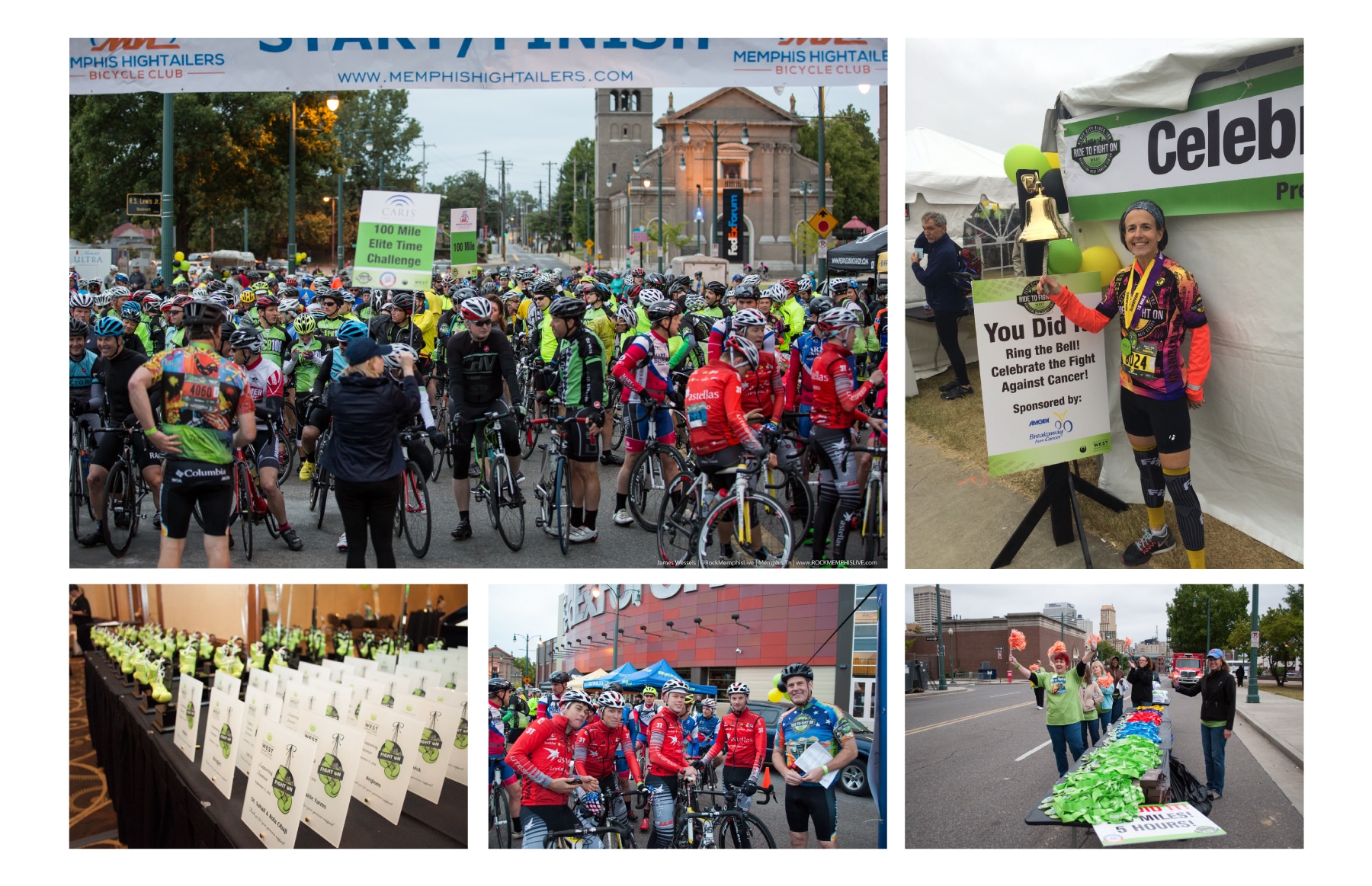
Ride to Fight On was a one-day special event held in October 2015 to raise funds and increase awareness for The University of Tennessee/West Institute for Cancer Research, the non-profit fundraising arm for West Cancer Center.
Funds are used for discovery, innovation and advancement in the field of adult cancer research and patient education, care and support. The event featured four cycling routes of varying lengths that departed from downtown Memphis and traveled around and out of the city.
Participants were encouraged to ride and raise funds by securing donations. In addition, monetary and in-kind sponsorships were solicited. The day was promoted as a family-oriented event centered on cycling and cancer and overall health awareness. In addition to the rides, participants enjoyed a celebration and vendor village, featuring entertainment, food, and beverages, plus health and fitness education offerings. Year-long preparation included research and planning to ensure successful execution of the event against measurable objectives.
RESEARCH
The need for research was prompted by the desire to ensure the event’s success and thereby create greater awareness of West Cancer Center and its mission. Since this was a relatively new event (only the second year), the challenge was to increase awareness of it and West Cancer Center, as differentiated from the West Clinic.
Primary research included conversations with cyclists who had participated in previous or similar events in the area, as well as with members of organizations who had hosted similar types of events. Additional primary research included an evaluation of different types of charity fundraising events. Secondary research included web-based analyses of existing fundraising events and organizations hosting them, as well as an exhaustive search of cycling clubs, cycling events and bike shops within a six state radius, and an examination of organizations and groups that are typically involved with cancer-related initiatives and events (medical research and pharmaceutical groups, education and treatment facilities and charitable foundations.)
Given the unique characteristics of a cycling event, research was critical to ensure the financial success of the event as well as the safety and well-being of participants and volunteers.
The research defined ideal organizations to partner with for event execution and an effective communication plan to potential participants, sponsors and volunteers. Messaging for this event needed to include language and information that was specific to cyclists, potential sponsors and donors, and support organizations.
PLANNING
We developed a plan that focused on the unique attributes of this event and the benefits of involvement for participants and supporters. The plan targeted anyone affected by cancer, those who supported cancer-related events, those who were previously involved in Ride to Fight On or similar events, those who could potentially become involved with this event, or those that could support the execution of it.
Specific, measureable objectives were to have 1,000 participants, raise $500,000, secure $100,000 in media sponsorships, secure $50,000 in advertising equivalency value for earned media impressions with an audience of 8,000,000 for earned media. The overall strategy featured recurring communications to each group designed to appeal to their interests and how they correlated to this event.
The plan included a multi-channel, budget-conscious approach of email, social media, traditional media (print, radio, TV, Out of Home), public relations, sales kits, web site, and grass roots efforts (yard signs, posters, flyers, rack cards and more,) within a strict budget of 10,000.
EXECUTION
Executed by professionals with experience in marketing, event planning and fundraising, the result was a well-coordinated effort that capitalized on each person’s strengths to achieve the desired results.
The plan followed a strict schedule of communications and preparation, with regular checkpoint meetings to discuss progress, share results, and develop ideas to overcome barriers to success.
Key tactics were to tell the story and relate why and how to become involved. We encountered several difficulties in executing the plan. The quantity and variety of organizations involved with cancer research and patient support is significant. Differentiating West Cancer Center within this group was a primary challenge.
Feedback suggested that people did not readily distinguish West Cancer Center from West Clinic. The challenge was to communicate that funds were benefitting a non-profit entity that funded research and patient support. Creating an identity for an untraditional charitable event was another challenge. Unlike galas or runs/walks, cycling events appeal to a specialized segment of the population. To combat these challenges, we developed a well-defined strategic communications plan that would resonate with the desired segments of the population.
In addition, we partnered with various local organizations and groups that were directly associated with West Cancer Center, previous ride events and the medical community. Several organizations were involved, most notably the Memphis Hightailers cycling club (the largest in Memphis), medical leaders and students at the University of Tennessee Health Science Center, and sponsor organizations.
Traditional and non-traditional public relations tactics were used to promote this event and generate awareness of West Cancer Center. We employed all forms of social media, radio and television ads and spots, billboards, ad placements in magazines and newspapers, email blasts, press conferences, and an event-specific website.
Local media companies were secured as sponsors to limit the advertising budget and create brand advocates - not only the media outlets, but recognizable personalities such as Joe Birch, a nightly TV news anchor, and Ron Olson, a cyclist and radio DJ, both well-known and long-time residents of Memphis.
EVALUATION
Upon event completion, success was evaluated against measurable objectives using direct comparison to the previous years’ results - specifically participation rate, funds raised/donations received, and media impressions.
Results indicate the event was a success, achieving increases in number of participants, significant PR/Media impressions, a large social media footprint, total revenue, and net income. In spite of a tough budget, the event also excelled in expense savings, bringing net income close to plan. Finally, in-kind donations soared above prior years. Overall, the results reflected a decisive achievement of established measurable objectives and validated the event’s original strategy and planning.